

We may earn money or products from the companies mentioned in this post.
Air-dried dog food can simplify serving, but a convenient bag can still be expensive to use as a full diet. The useful question is whether its preparation routine, storage requirements, and cost at your dog’s calorie allowance fit your household.
The main potential advantages are ready-to-serve convenience, portability, and storage without freezing when the product’s directions allow it. The main drawbacks are feeding cost, the need to measure portions carefully, and recipe-specific nutritional or storage limitations. Air-drying alone does not establish better health outcomes, allergy suitability, or freedom from contamination.
This is a source-based buying guide, not a hands-on feeding trial. Examples and prices were checked on October 30, 2026.
What Is Air-Dried Dog Food?
Air-dried food is made by removing moisture using circulating air. Temperature, processing steps, texture, and serving directions vary by manufacturer. The term identifies a process; it does not tell you whether a product is a complete meal, a topper, or a treat.
Some products can be served directly from the bag. Others have different instructions. Avoid assuming that every air-dried product is soft, chewy, raw, cooked, or interchangeable with another brand.
How the Main Formats Differ
These are broad descriptions to help compare routines. The exact package’s preparation and storage directions take priority.
| Format | General description | Preparation and storage considerations |
|---|---|---|
| Kibble | Cooked and dried pieces | Commonly served directly; follow the package’s dry-storage directions |
| Air-dried | Moisture removed using circulating air | Some recipes are ready to serve; check whether water is required or optional |
| Dehydrated | Moisture removed through a drying process | Some recipes need water and a waiting period before feeding |
| Freeze-dried | A different moisture-removal process using freezing and reduced pressure | Follow the specific rehydration instructions; freeze-dried does not automatically mean cooked |
| Canned wet food | Moist food in a sealed container | Serve according to directions and promptly refrigerate unused portions |
Air-drying and dehydration are related drying descriptions, not universal guarantees of distinct temperatures or textures. For example, The Honest Kitchen Wholemade dehydrated meals require warm water and a three-minute wait under the manufacturer’s preparation guidance. They should not be described as its air-dried range.
For a practical comparison of those two serving routines, see our ZIWI Peak versus The Honest Kitchen guide.
Potential Advantages
A Simple Serving Routine
A recipe that can be served directly avoids the mixing, waiting, or thawing required by some alternatives. That can help when a pet sitter is feeding your dog or when meal preparation time is limited.
The benefit is relative to the food being replaced. Kibble can also be ready to serve, so this convenience is not exclusive to air-dried products. Compare the actual routine rather than paying extra for a benefit your current food already provides.
Portability and Storage Before Serving
A product whose directions permit pantry storage may be practical for travel or households with limited freezer space. Take enough of the familiar food for the trip, retain its package information, and protect it from heat and moisture.
Pantry storage does not mean it can stay in a hot vehicle, damp tent, or open bowl indefinitely. Confirm the storage conditions at the destination, especially if the food will be moistened before serving.
Flexible Use as a Measured Topper
Some complete air-dried meals are also marketed for topper or reward use. That allows a smaller calorie allocation rather than replacing the whole diet. The rest of the diet still costs money, and adding a food does not automatically improve a base diet that already meets the dog’s needs.
Use a calorie calculation instead of an undefined spoonful. If the new food supplies 100 calories, reduce the existing food by the appropriate amount for the feeding plan. A prescribed diet may have restrictions on other foods, so ask before adding a topper.
A product labeled for intermittent or supplemental feeding is different from a complete diet. It should not become the sole food merely because it is sold in the same format.

Main Disadvantages
The Full-Diet Cost Can Be Substantial
Bag price and bag weight are not enough to estimate monthly spending. Compare the calories in the package with the calories allocated to that food each day.
The following example uses ZIWI Peak Original Air-Dried Beef, its listed energy of 4,900 kcal/kg, and one-time US manufacturer prices checked October 30, 2026. These four sizes were available at that check; prices and stock can change. Tax, shipping, discounts, and wastage are excluded.
| Package size | Listed price | Approximate package calories | Cost per 100 kcal |
|---|---|---|---|
| 16 oz | $29.98 | 2,223 kcal | $1.35 |
| 2.2 lb | $59.98 | 4,890 kcal | $1.23 |
| 5.5 lb | $146.48 | 12,224 kcal | $1.20 |
| 8.8 lb | $199.98 | 19,559 kcal | $1.02 |
Source: ZIWI’s US Beef product page. Calculations use advertised net weights converted at 0.45359237 kilograms per pound, with unrounded values retained until the final result. Displayed package calories are rounded.
At an 800-calorie daily allocation, the 8.8-pound example costs approximately $8.18 per day or $245.39 over 30 days. This is a budget scenario, not a recommended ration for a dog of a particular weight.
Cost per 100 calories = package price ÷ total package calories × 100.
Total package calories = net package weight in kilograms × kcal/kg.
This example does not establish the price of all air-dried foods or the size of the difference from every kibble. Apply the same calculation to the exact alternatives you are considering.
A Different Format Can Have a Different Cost
For context, the available 7-pound box of The Honest Kitchen Wholemade Grain Free Beef was listed at $99.99. Its manufacturer gives 514 calories per dry cup and approximately four dry cups per pound. That yields about 14,392 calories per box before adding water.
| Verified example | Format | Approximate cost per 100 kcal | Cost for a hypothetical 500 kcal/day | Cost over 30 days |
|---|---|---|---|---|
| ZIWI Peak Original Beef, 8.8 lb | Air-dried | $1.02 | $5.11 | $153.37 |
| The Honest Kitchen Wholemade Grain Free Beef, 7 lb | Dehydrated; water required | $0.69 | $3.47 | $104.21 |
Source for the second example: The Honest Kitchen’s product page. Its cup-yield estimate makes the calculation approximate. The comparison illustrates two specific products and package sizes, not a universal price ranking between formats. It also does not establish equal life-stage suitability, nutritional superiority, or equivalent feeding instructions.
Added water changes prepared weight and volume, not the calories in the measured dry serving. Comparing pounds of prepared food with pounds of dry food can therefore obscure value.
Portions Need Careful Measurement
A small-looking portion can supply more calories than expected. Check the exact recipe’s energy statement rather than assuming an equal cup of two foods contains equal energy.
For the ZIWI Beef example, 4,900 kcal/kg equals 4.9 kcal per gram:
| Hypothetical calorie allocation | Approximate dry weight |
|---|---|
| 100 kcal | 20.4 g |
| 250 kcal | 51.0 g |
| 500 kcal | 102.0 g |
| 800 kcal | 163.3 g |
These amounts demonstrate measurement, not an individual dog’s needs. A kitchen scale can help reproduce an intended gram amount. Account for every meal, topper, training reward, and other calorie source, and follow an appropriate feeding plan.
Larger Bags Create a Storage Trade-Off
A lower cost per calorie only helps if the food will be used within its storage guidance. ZIWI recommends feeding before the printed best-before date and generally within eight weeks of opening, while keeping its bag sealed. That is product-specific guidance, not a shelf-life rule for the entire category.
In the 8.8-pound example, a 100-calorie daily allocation would take approximately 196 days to use the bag. A household buying it only for small toppers should therefore consider a smaller package even though its price per calorie is higher.
Do not treat an opening guideline as permission to keep food that has spoiled, become damp, or been stored improperly.
Nutritional Adequacy Matters More Than the Format Name
Read the nutritional adequacy statement and intended life stage before choosing a sole diet. The FDA’s complete-and-balanced guidance explains how those claims relate to AAFCO nutrient profiles or feeding procedures. AAFCO does not approve individual pet foods.
Life-stage restrictions can differ even within one brand. ZIWI’s current Beef statement excludes growth of dogs expected to weigh at least 70 pounds as adults. Do not transfer another recipe’s puppy suitability to this one. Our ZIWI Peak Beef review examines the specific recipe further.
For a dog with a medical condition or prescribed diet, ask your veterinarian to assess the complete formula and feeding plan. A fat minimum on a guaranteed analysis is not an exact measured fat content or proof that a food meets a therapeutic target. Request appropriate nutrient information when it matters clinically.
An ingredient list can help identify ingredients you need to discuss or avoid. It does not establish allergy safety, digestibility, or nutritional quality by itself. Grain-free, meat-first, and premium-priced are not evidence of superior health outcomes.
Storage, Handling, and Transition
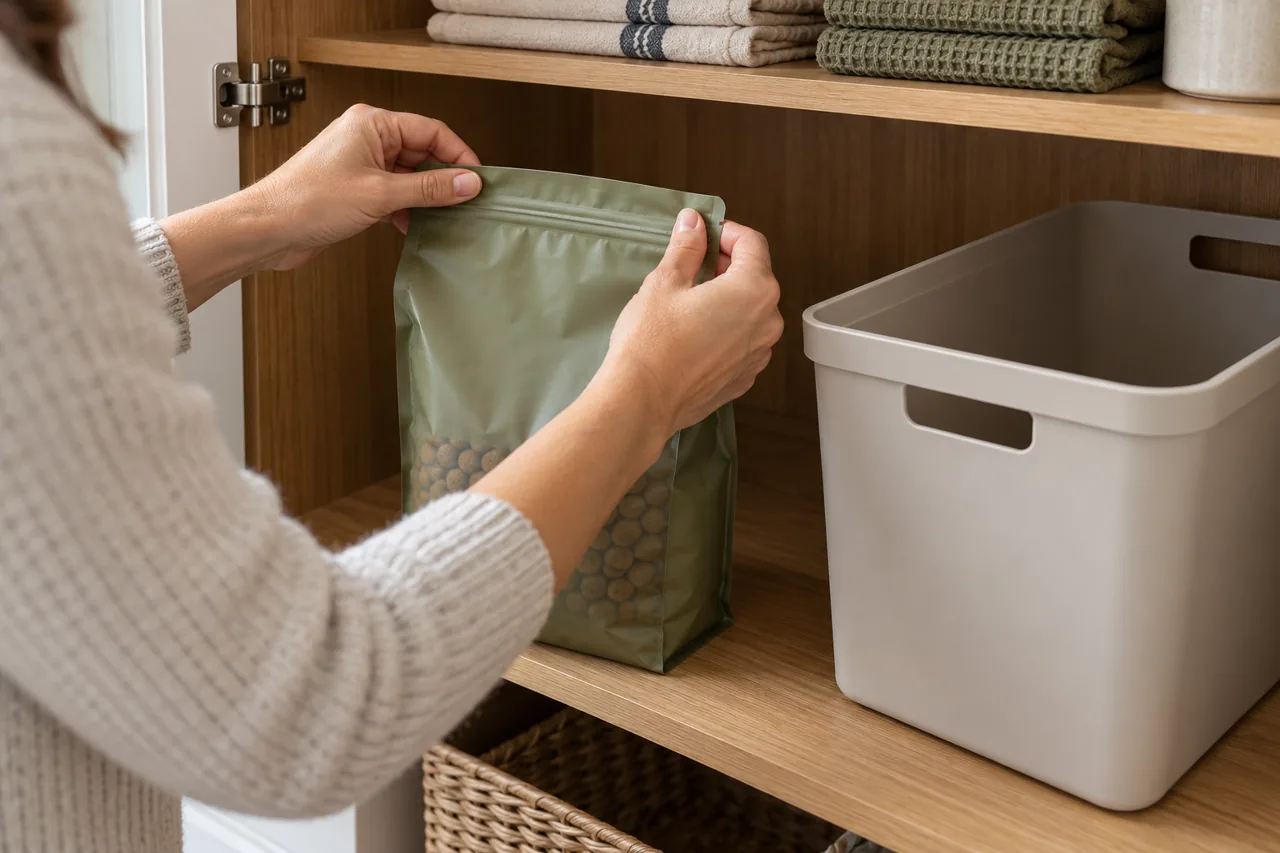
The FDA’s storage guidance recommends keeping dry pet food cool and dry, below 80°F. Retain the original packaging and its product, lot, UPC, and best-by information. If using an outer container, keep the bag inside it when possible.
Clean and dry storage containers between bags. Wash and dry bowls and scooping or measuring utensils after each use. Keep food secure from pets and pests, and follow any stricter product instructions.
Follow the recipe’s transition guidance. For example, ZIWI recommends gradually increasing its food while reducing the previous food over at least seven days. Significant or persistent vomiting, diarrhea, food refusal, or other concerning symptoms warrant veterinary advice rather than an assumption that they are a normal adjustment.
Provide fresh drinking water. If adding water to food, follow the preparation directions and handle the moistened portion according to the product’s leftover-storage instructions. The dry package’s shelf stability does not apply automatically to a wet bowl.
Does Air-Drying Eliminate Bacteria?
Do not infer a validated pathogen-control process from the format name. Ask the manufacturer how it controls contamination and whether the product is raw or cooked.
The CDC’s pet-food safety guidance notes that pet food can contain harmful germs and does not recommend feeding raw pet food. Air-dried and freeze-dried labels alone do not demonstrate that raw ingredients have received a cooking step. Good household hygiene remains necessary, and food can be contaminated without visible spoilage.
Who Should Consider It?
An air-dried recipe may be worth considering when:
- Its verified preparation routine solves a practical problem for your household.
- Its package size and opened-storage guidance fit how quickly you will use it.
- Its calculated calorie cost fits the budget for the intended full meal or topper allocation.
- Its adequacy statement matches your dog’s life stage and dietary needs.
- You can measure portions and follow the storage and handling directions.
Texture preference is individual. This guide does not establish that air-dried food will resolve picky eating or that a dog refusing its usual food should simply be offered a premium alternative. New or persistent appetite changes deserve attention.
If your current complete food suits your dog and routine, this guide provides no evidence that switching formats is necessary. Compare actual recipes and costs before deciding.
Quick Buying Checklist
- Confirm whether it is a complete food, topper, treat, or supplement.
- Read the exact adequacy statement and any large-size puppy restriction.
- Check calories per kilogram and the stated serving unit.
- Calculate the cost of the intended daily allocation.
- Compare the package’s likely use time with its opened-storage guidance.
- Verify whether water is required and how prepared leftovers must be handled.
- Review ingredients and relevant nutrient information against your dog’s feeding plan.
- Check manufacturer contact details, quality-control information, lot identification, and best-by date.
Frequently Asked Questions
Is Air-Dried Dog Food Healthier Than Kibble?
The format alone does not establish that. Assess the specific recipe, nutritional adequacy, manufacturer information, feeding plan, and your dog’s needs. This guide did not test health outcomes or compare dogs fed different formats.
Does It Need Water Added?
Check the exact package. Some air-dried products are ready to serve, while other foods require rehydration. Do not borrow preparation instructions from a different format or recipe.
Can It Be Used as a Topper?
Where the manufacturer permits that use and it fits the dog’s feeding plan, count its calories and adjust the existing food. A supplement-only product should not replace a complete diet, and another complete food may still be unsuitable alongside a prescribed diet.
Is the Largest Bag Always the Best Value?
It may have a lower price per calorie, but that advantage can disappear if the food cannot be used within its storage guidance. Compare expected use time, not just the discount for buying more.
Is It Worth the Premium Price?
It may be when a particular recipe and serving routine solve a practical need at an affordable cost. Marketing terms alone do not establish that it provides a benefit over another suitable complete food.
Final Verdict
Air-dried dog food can offer a convenient serving routine and useful portability. Its main trade-offs are the cost of the calories used, portion measurement, opened-package storage, and the suitability of the exact recipe.
Choose by nutritional adequacy, practical handling, and a realistic budget. A smaller measured allocation may cost less than full-diet use, but neither approach guarantees a nutritional improvement or a better feeding response.