

We may earn money or products from the companies mentioned in this post.
Choosing the best ZIWI Peak air dried dog food for your dog means looking beyond similar bags and premium branding. This roundup compares three Original Air-Dried dog recipes by life-stage suitability, ingredients, published nutrition, and feeding cost so you can narrow the choice before buying.
Quick Recommendations
There is no demonstrated best recipe for every adult dog. Start with your dog’s nutritional needs and ingredients they tolerate, then calculate the cost at the amount you expect to feed.
| Your priority | Recipe to evaluate | Main qualification |
|---|---|---|
| A lamb-focused option | Original Air-Dried Lamb | Check the full ingredient list, which also includes mussel. |
| A beef-focused option for an eligible dog | Original Air-Dried Beef | The current adequacy statement excludes a specific large-dog growth category. |
| A fish-and-lamb option with different label guarantees | Original Air-Dried Mackerel & Lamb | Lower listed fat minimum does not establish that it is a therapeutic low-fat food. |
| A sole diet for a puppy expected to reach at least 70 pounds | Evaluate Lamb or Mackerel & Lamb with your veterinarian | Their current statements include that growth category; Beef’s excludes it. |
| The lowest feeding cost | Compare actual prices per calorie | This assessment does not establish a current cheapest recipe. |
These are conditional editorial recommendations based on published information. No feeding trial, preference test, independent laboratory analysis, or comparative smell test was conducted for this article. This roundup covers the three named recipes, not the brand’s entire range.
Published Nutrition: Side-by-Side
The official US pages were checked on October 30, 2026. Minimums and maximums are label guarantees, not exact nutrient measurements in every serving.
| Published measure | Lamb | Beef | Mackerel & Lamb |
|---|---|---|---|
| Crude protein, minimum | 38% | 38% | 44% |
| Crude fat, minimum | 30% | 30% | 24% |
| Crude fiber, maximum | 3% | 3% | 3% |
| Moisture, maximum | 14% | 14% | 14% |
| Calculated energy, kcal/kg | 4,950 | 4,900 | 4,500 |
| Calculated energy, kcal per level cup | 469 | 465 | 427 |
Mackerel & Lamb has the highest protein minimum and lowest fat minimum in this particular comparison. Those differences alone do not establish a healthier food, better digestion, improved weight control, or superior performance.
Life-Stage Coverage
| Recipe | Manufacturer’s current nutritional adequacy statement, summarized |
|---|---|
| Lamb | Formulated to meet AAFCO Dog Food Nutrient Profiles for all life stages, including growth of large-size dogs. |
| Beef | Formulated to meet those profiles for all life stages, except growth of large-size dogs. |
| Mackerel & Lamb | Formulated to meet those profiles for all life stages, including growth of large-size dogs. |
The statements define large-size dogs as dogs expected to weigh 70 pounds or more as adults. Read the statement on the actual bag when buying; labeling and formulations can change.
AAFCO does not approve or endorse pet foods. A statement that a recipe is formulated to meet a nutrient profile should not be described as “AAFCO approved” and does not, by itself, establish that the product passed a feeding trial.
Original Air-Dried Lamb: Evaluate for a Lamb-Focused Feeding Plan
Lamb’s ingredient list starts with lamb, lamb tripe, lamb lung, lamb heart, lamb liver, and lamb bone. It also contains New Zealand green mussel, additional lamb ingredients, plant ingredients, vitamins, and minerals.
Its principal appeal in this roundup is practical: a lamb-focused option with the life-stage coverage summarized above. That does not make it automatically safer, easier to digest, or a better choice for a dog that has never eaten lamb.
Potential Advantages
- A candidate when the listed ingredients fit the individual dog’s feeding plan.
- The most calorie-dense of these three according to the published figures.
- An adequacy statement that includes the large-dog growth category discussed above.
Limitations
- More calories per unit of food are not an advantage when the feeding amount is inappropriate.
- Its selected nutrient guarantees and premium positioning do not prove superior outcomes.
- A lamb-focused name is not a substitute for reviewing every ingredient.
Best fit: Owners evaluating a lamb-focused recipe that meets their dog’s individual needs, rather than seeking a universal default.
Original Air-Dried Beef: Evaluate When Beef Fits the Dog
Beef’s first ingredients are beef, beef tripe, beef heart, beef lung, beef liver, and beef kidney. Its list also includes beef bone, mussel, other beef ingredients, and supporting plant ingredients and supplements.
An established history of tolerating the listed ingredients can be useful context, but past experience does not guarantee the suitability of a new finished food. Matching Lamb’s protein and fat minimums does not make the two complete formulations interchangeable.
Potential Advantages
- A beef-focused candidate for a dog whose life stage and individual needs it suits.
- Published calorie information supports an equivalent comparison of feeding amounts and costs.
- The growth exclusion does not exclude large-breed adulthood.
Limitations
- Should not be the sole growth diet for puppies covered by that exclusion.
- Has no verified price advantage in this assessment.
- Rotating away from or toward beef is not, on its own, an allergy investigation.
Best fit: Owners evaluating Beef for an eligible dog without assuming it is the cheapest or nutritionally identical to Lamb.
For the ingredient and feeding discussion in more detail, see the ZIWI Peak Air-Dried Beef review.
Original Air-Dried Mackerel & Lamb: Evaluate for a Fish-Inclusive Option
The ingredient list starts with mackerel, lamb, lamb tripe, lamb lung, lamb heart, and lamb liver. It also includes green mussel, additional lamb ingredients, plant ingredients, vitamins, and minerals. This is a fish-and-lamb recipe, rather than an alternative for a dog that needs to avoid lamb.
Its different guarantees and energy density make it worth a separate assessment. They do not establish it as the best choice for a sedentary dog or a dog needing a prescribed fat restriction.
Potential Advantages
- A candidate when fish and lamb are suitable ingredients for the dog.
- A distinct set of published protein, fat, and calorie figures compared with the other two.
- A current adequacy statement that includes the large-dog growth category.
Limitations
- Lower energy density means more food by weight is needed to supply the same calories.
- A cheaper-looking bag does not necessarily mean a lower cost per calorie.
- This comparison provides no tested evidence of stronger smell, better acceptance, or superior digestive tolerance.
Best fit: Owners specifically evaluating a fish-inclusive formulation whose full ingredients and nutritional profile fit their dog.

How to Choose Between the Three
Start with Life Stage and Individual Needs
For a large-breed puppy within the stated exclusion, do not select Beef as the sole growth diet. Evaluate an appropriately labeled food with the veterinarian supervising growth instead of treating a roundup recommendation as an individual prescription.
For an adult dog, look beyond puppy coverage to the dog’s current needs. A medically managed diet or prescribed nutrient restriction may call for another food entirely.
Check Ingredients Without Assuming Allergy Benefits
All three recipes contain mussel. Lamb and Beef should not be treated as single-animal-species exclusion diets merely because of their product names.
None of these recipes is recommended here for a diagnostic elimination trial. AAHA guidance favors veterinarian-selected prescription diets for true commercial trials because undeclared proteins in over-the-counter foods can compromise the result. Organ meat and bone alone do not determine whether a food is appropriate for a trial.
Compare the Feeding Plan, Not Just the Cup
Use the current package and feeding calculator as starting points, account for the rest of the diet, and monitor body condition and weight. Measuring by weight can make portions easier to track. Do not assume the same scoop of different foods provides the same energy.
For a more focused two-recipe discussion, read the Lamb vs Beef comparison.
Feeding Cost: Use the Same Calorie Basis
Compare current prices for the exact size, retailer, and purchase arrangement, including subscription terms, shipping, and taxes. No size-specific current price or cheapest retailer has been verified for this assessment.
The following is a hypothetical example assuming each recipe costs $60 for 1 kg. This is an arithmetic illustration, not a current offer, a claim that an exact 1 kg package is sold, or a feeding recommendation.
| Recipe | Energy in an assumed 1 kg bag | Approximate cost per 100 kcal | Approximate cost for 500 kcal |
|---|---|---|---|
| Lamb | 4,950 kcal | $1.21 | $6.06 |
| Beef | 4,900 kcal | $1.22 | $6.12 |
| Mackerel & Lamb | 4,500 kcal | $1.33 | $6.67 |
Cost per 100 kcal = bag price ÷ (bag weight in kg × kcal/kg) × 100.
At identical price and weight, Lamb’s higher energy density produces a slightly lower feeding cost than Beef’s. Mackerel & Lamb costs about 10% more per calorie than Lamb in this equal-price example. Different actual purchase prices can change the outcome.
The 500-calorie column is a calculation scenario, not a daily requirement for a particular dog. Use the amount actually fed from this food to estimate daily cost. A larger bag is better value only when its real price and expected use justify it.
Meal, Topper, or Treat Use
Consider complete-meal use only within the package’s nutritional adequacy coverage and the individual dog’s needs. For toppers or treats, account for their calories and adjust the rest of the feeding plan appropriately.
A topper does not automatically improve an already adequate diet. Additions to a puppy’s growth diet or a medically managed diet deserve particular care and veterinary guidance.
Transition and Storage
ZIWI recommends introducing its food gradually over at least seven days while reducing the previous food. Persistent or significant digestive symptoms warrant veterinary advice rather than being assumed to be normal adjustment.
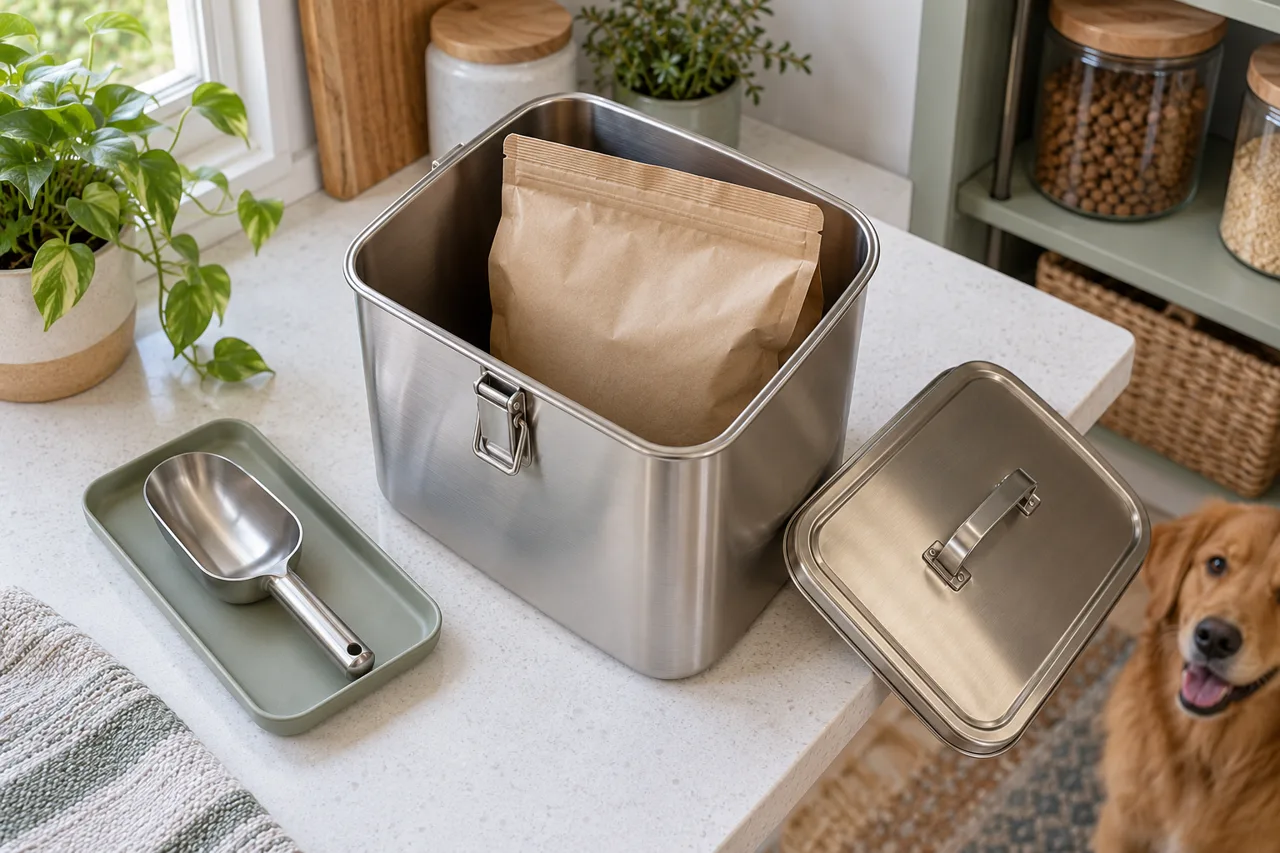
The manufacturer recommends keeping the food in its sealed original package, observing the best-before date, and generally using it within eight weeks of opening. Protect it from moisture and heat and discard spoiled food.
Follow FDA hygiene guidance for hands, bowls, and measuring equipment. Air-dried food should not be assumed sterile.
Frequently Asked Questions
Which recipe is best overall?
This assessment does not establish a universal winner. Choose using the dog’s life stage, individual needs, ingredient suitability, and actual feeding cost.
Is Mackerel & Lamb a low-fat diet?
Its listed fat minimum is lower than the other two, but that does not establish that it meets a therapeutic fat restriction. Ask the treating veterinarian for an appropriate diet and nutrient information when needed.
Is Beef cheaper than Lamb?
Not necessarily. At the same price and weight, Beef’s slightly lower energy density means a slightly higher cost per calorie. Use the actual retailer prices to decide.
Can large-breed puppies use any of the three as their only food?
Respect the adequacy statements summarized above. Beef excludes the relevant growth category; evaluate an appropriately labeled option with the veterinarian supervising growth.
Final Recommendation
Evaluate Lamb for a lamb-focused feeding plan, Beef when its ingredients and life-stage coverage fit, and Mackerel & Lamb when a fish-inclusive formulation is appropriate. None earns a universal recommendation from the label numbers alone.
Before buying, read the actual package, calculate the feeding cost, and choose a bag size you can use within storage guidance. Individual suitability matters more than a broad “best” label.
Sources
Official US recipe information was checked October 30, 2026. Product statements are manufacturer-published information, not independent testing.